This post may contain affiliate links. Please read our disclosure policy.
If you ask me what traditional Greek food really tastes like, I’ll tell you it tastes like my yia-yia’s kitchen on a Sunday afternoon. Olive oil sizzling in the pan, oregano on everything, and a table full of dishes meant to be shared. These aren’t recipes I discovered while travelling. They’re the foods I grew up eating in a Greek-Canadian household where dinner was loud, generous, and always centred around family. From flaky spanakopita to the sweet and delicious baklava, this guide covers the dishes that define Greek home cooking. If you’re searching for popular Greek food that actually reflects what Greek families cook and eat, you’re in the right place. They don’t call me the Greek mommy for nothing!
Why You’ll Love This Guide
- Written by a Greek home cook, not a tourist: I grew up in a Greek household where yia-yia’s recipes were part of everyday life. These recipes are authentic and bring a bit of my home and culture to yours.
- Every dish links to a tested recipe: Every recipe in this guide is linked so you can actually make it at home.
- Heritage and cooking science together: Greek cooking is simple, but there’s intention behind everything. From bread soaked into meatballs for tenderness to the careful tempering in avgolemono soup.
- Your gateway to Mediterranean home cooking: Whether you’re reconnecting with your heritage or learning about Greek food for the first time, this guide is the perfect starting point.
What Makes Greek Cooking Special
Greek cooking has always been about simplicity. The best meals from my mama’s kitchen weren’t built around complicated techniques or fancy ingredients; they were built around what was fresh, seasonal, and available. Tomatoes that actually taste like tomatoes. Good olive oil used generously, not sparingly. Fresh herbs, lemons, beans, greens, and bread on the table at all times. Traditional Greek food is deeply connected to the land and the seasons, which is why so many dishes feel comforting without being heavy.

Maria Koutsogiannia
Maria is the creator of FoodByMaria and your go-to Greek food expert for cozy, flavor-packed recipes. Inspired by her Mediterranean roots, she brings traditional Greek flavors, feel-good ingredients, and a whole lot of joy to everyday cooking.
One of the most beautiful parts of Greek cooking is the ladera tradition aka vegetable dishes braised slowly in olive oil until silky and rich. Green beans, okra, peas, and stuffed vegetables become the main event, not just side dishes. In Greek homes, olive oil isn’t just a finishing touch. It’s the base of the meal, the sauce, the flavor, and the reason these dishes taste so deeply satisfying.
Food also goes hand-in-hand with gathering. Greek meals are meant to be shared slowly around the table. Meze spreads appear before dinner with dips, olives, bread, cheese, and little plates meant for passing around. Sundays always meant a loud family dinner in our house. Authentic Greek food isn’t about perfection. It’s about hospitality and feeding people generously.
Greek cooking is also one of the original foundations of the Mediterranean diet, long before it became a wellness trend. The Greek island of Ikaria is one of the world’s Blue Zones, regions where people consistently live longer lives. The traditional Greek way of eating olive oil, legumes, greens, herbs, fish, whole grains, moderate wine, and less processed food has been linked to longevity for generations. Find more recipes in my healthy Greek dinners guide.
And while people often talk about “Greek food” as one cuisine, the reality is far more regional. Northern Greek cooking uses more warming spices and ingredients influenced by Asia. Island cooking leans heavily on seafood, capers, and wild greens. Crete is famous for its olive oil and rustic vegetable-forward meals. Every region has its own pies, cheeses, sweets, and traditions, which is part of what makes Greek food endlessly interesting.
Traditional Greek Appetizers and Meze
Meze is one of the best parts of Greek food culture. These small shared plates are served with wine, ouzo, or tsipouro before a meal, or honestly, sometimes they become the meal themselves. The table fills up little by little with dips, breads, olives, cheese, vegetables, and warm dishes fresh from the oven. Some of the most popular Greek foods are actually found in the meze spread. Here are some you may see around the table.
Tzatziki
Tzatziki is the cool, garlicky yogurt dip that anchors almost every Greek table. A good tzatziki depends on thick, strained yogurt and properly salted cucumber, so the dip stays creamy instead of watery. We serve it with grilled meats, spoon it into pita wraps, and drag warm bread through it constantly.
Spanakopita
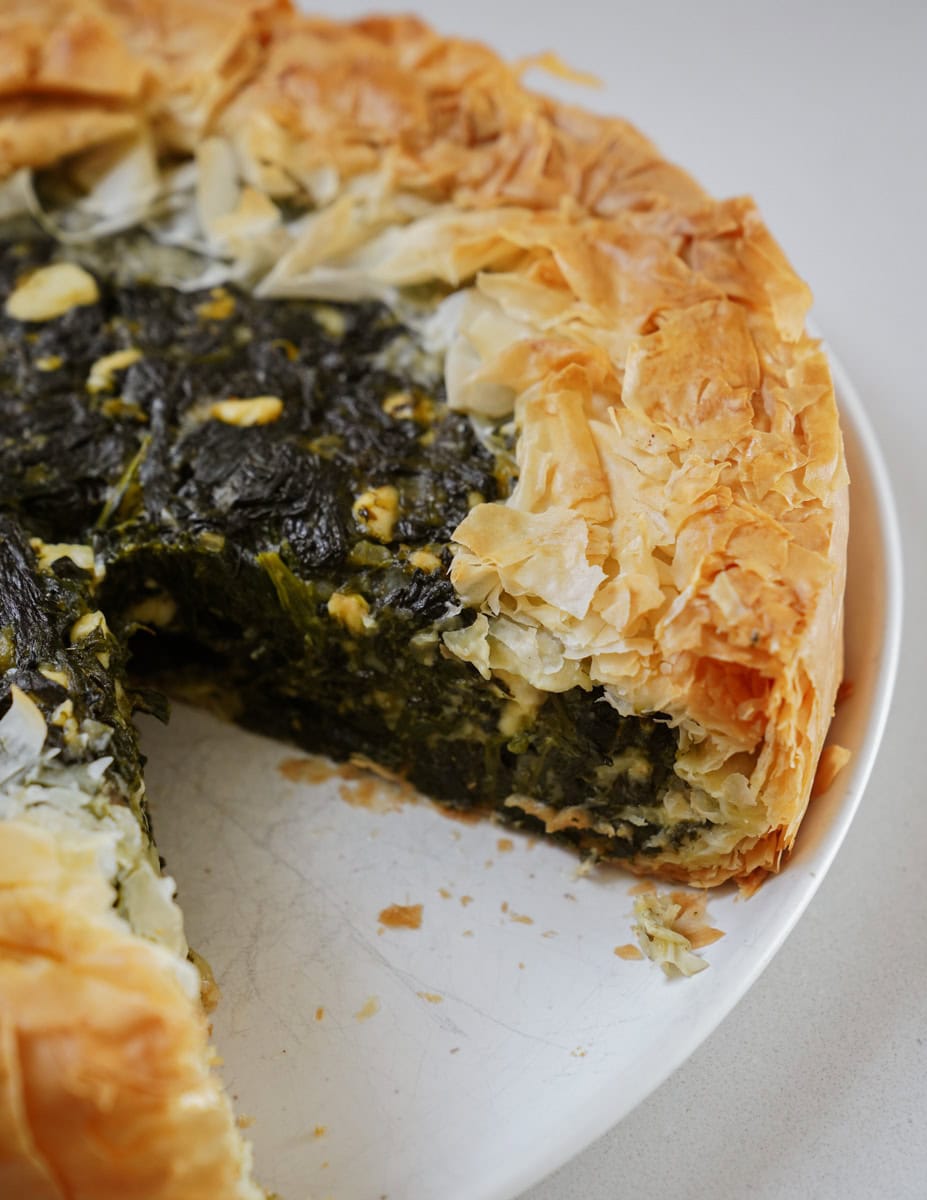
Spanakopita is flaky phyllo pastry layered with spinach, feta, dill, and herbs. Some families make giant tray-style pies while others fold individual triangles, but either way, it’s one of the most beloved Greek comfort foods. In Greece, spanakopita can be breakfast, lunch, dinner, or a snack standing at the counter.
Dolmades
Dolmades are grape leaves stuffed with herbed rice and sometimes meat, depending on the region and occasion. The meatless version is common during Lent, while meat-filled dolmades are often served with silky avgolemono sauce. They’re bright, lemony, and one of those dishes every Greek family claims their yia-yia makes best.
Bouyiourdi
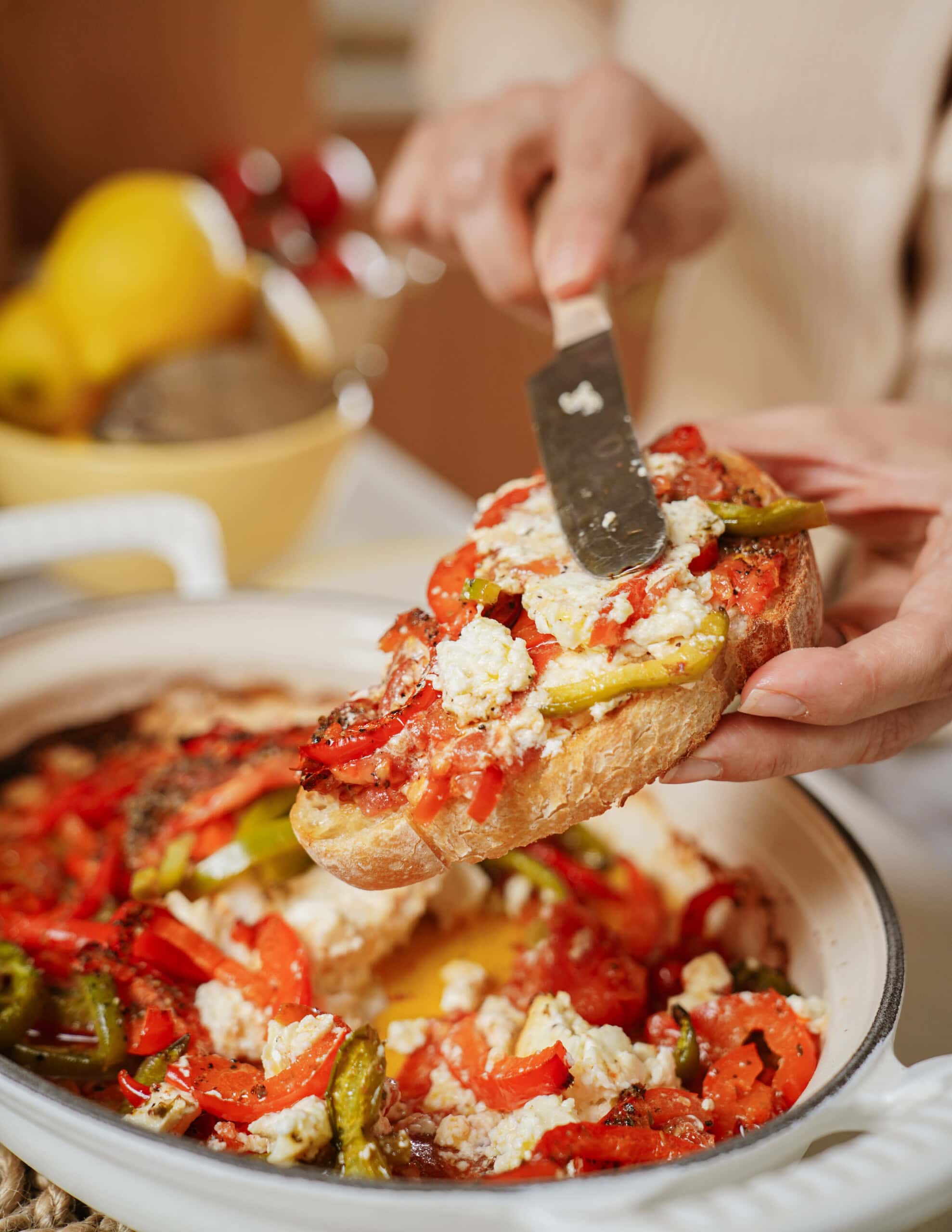
Bouyiourdi is baked feta with tomatoes, peppers, olive oil, and chilli flakes bubbling together in a hot dish. Honestly, it’s the original baked feta, long before social media made it trendy. Served with crusty bread, it’s spicy, salty, rich, and impossible to stop eating.
Tirokafteri
Tirokafteri (also known as spicy feta dip) blends roasted peppers and feta into a creamy, punchy spread that belongs on every meze table. It’s salty, spicy, smoky, and incredible with warm pita.
Saganaki
Saganaki is pan-fried cheese with a crisp golden crust and gooey centre. Traditionally made with cheeses like kefalograviera or kasseri, it’s often flambéed tableside with a dramatic “Opa!” before serving. It’s simple, theatrical, and deeply Greek.
Horiatiki (Greek Salad)
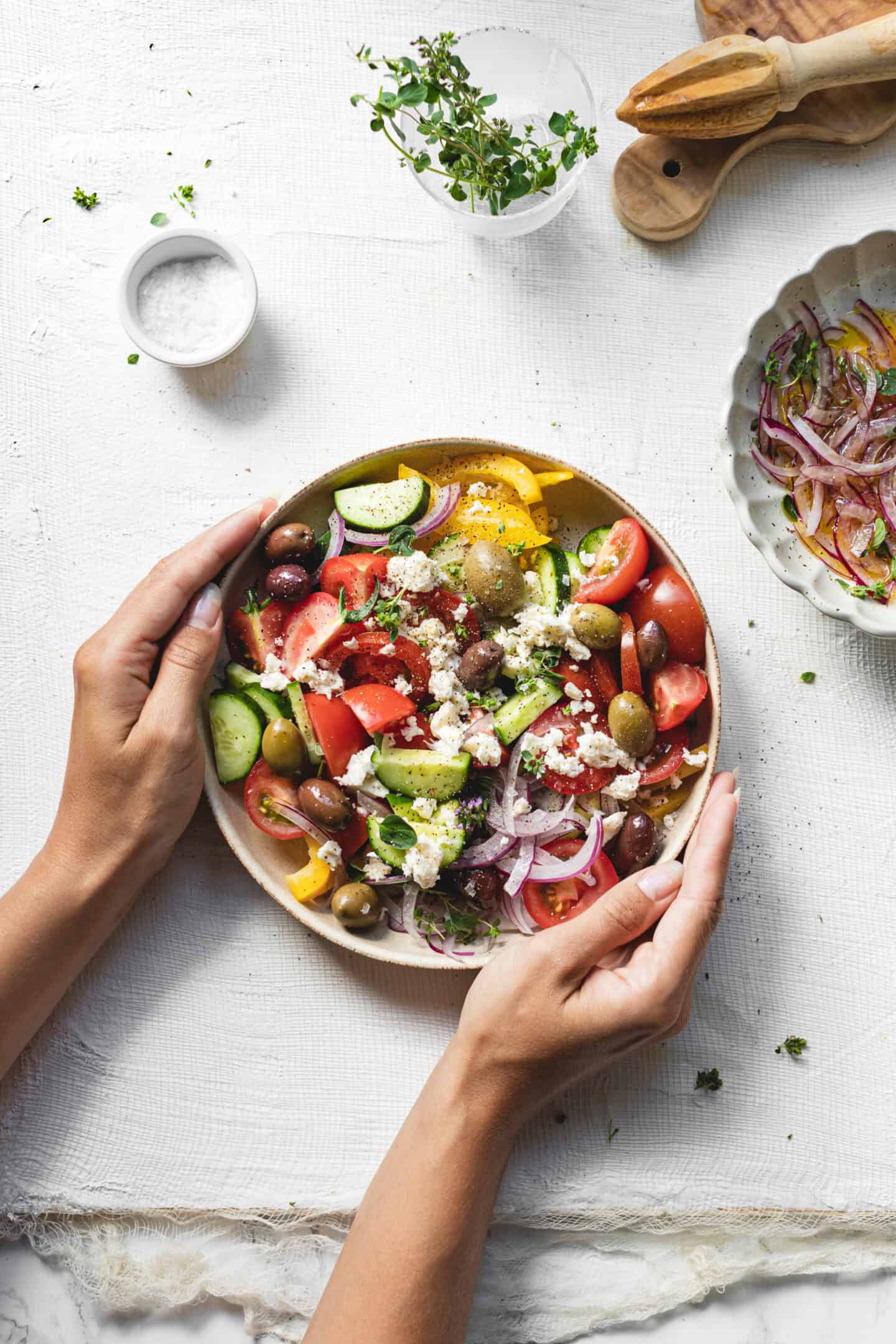
Real Greek salad (horiatiki) never contains lettuce. It’s made with juicy tomatoes, cucumbers, onion, olives, green peppers, oregano, olive oil, and a thick slab of feta on top. It’s the taste of summer in Greece and proof that great ingredients need very little.
Classic Greek Main Dishes
Greek main dishes are generous, comforting, and usually designed to feed a crowd. The oven does a lot of the work in Greek kitchens, with a focus on bubbling casseroles, slow-baked meats, and dishes that taste even better the next day. This is the heart of traditional Greek food.
Moussaka
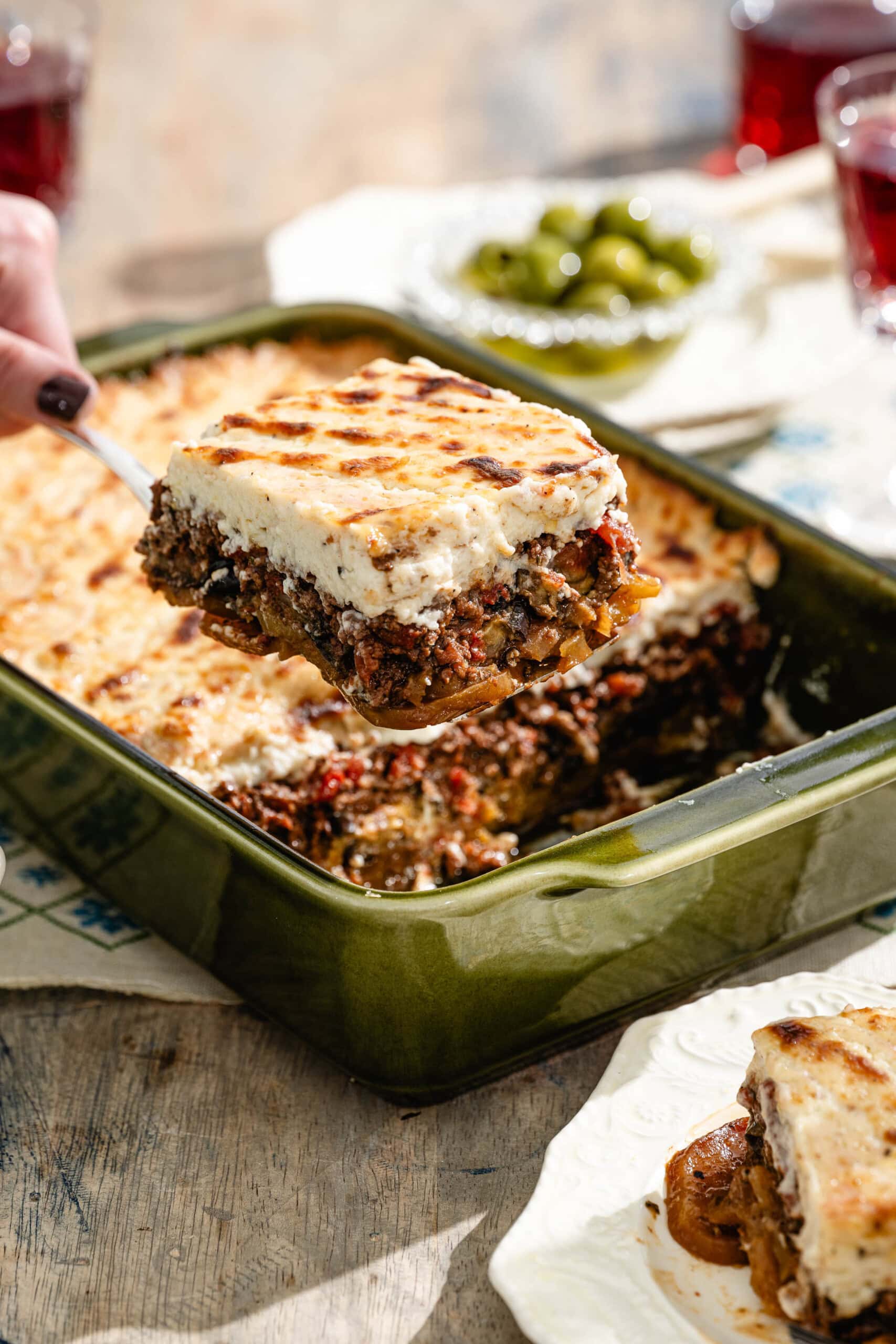
Moussaka is the iconic layered casserole of eggplant, spiced meat sauce, potatoes, and creamy béchamel. People often call it Greek lasagna, but the cinnamon and allspice in the meat sauce make it unmistakably Greek. Like many Greek baked dishes, it’s even better after resting overnight.
Pastitsio
Pastitsio is baked pasta layered with rich meat sauce and béchamel, basically moussaka’s pasta-loving cousin. Traditionally made with tubular noodles, it has a warm spice profile that sets it apart from Italian baked pasta dishes.
Keftedes (Greek Meatballs)
Greek meatballs are tender because the bread gets soaked before being mixed into the meat. Grated onion, oregano, mint, and sometimes cumin give them their signature flavour. They’re served as meze, tucked into pita, or eaten as a full dinner with potatoes and salad.
Soutzoukakia
Soutzoukakia are oblong meatballs scented heavily with cumin and baked in tomato sauce. They have roots in Asia Minor cuisine and are deeply comforting when served over rice or mashed potatoes.
Chicken Souvlaki
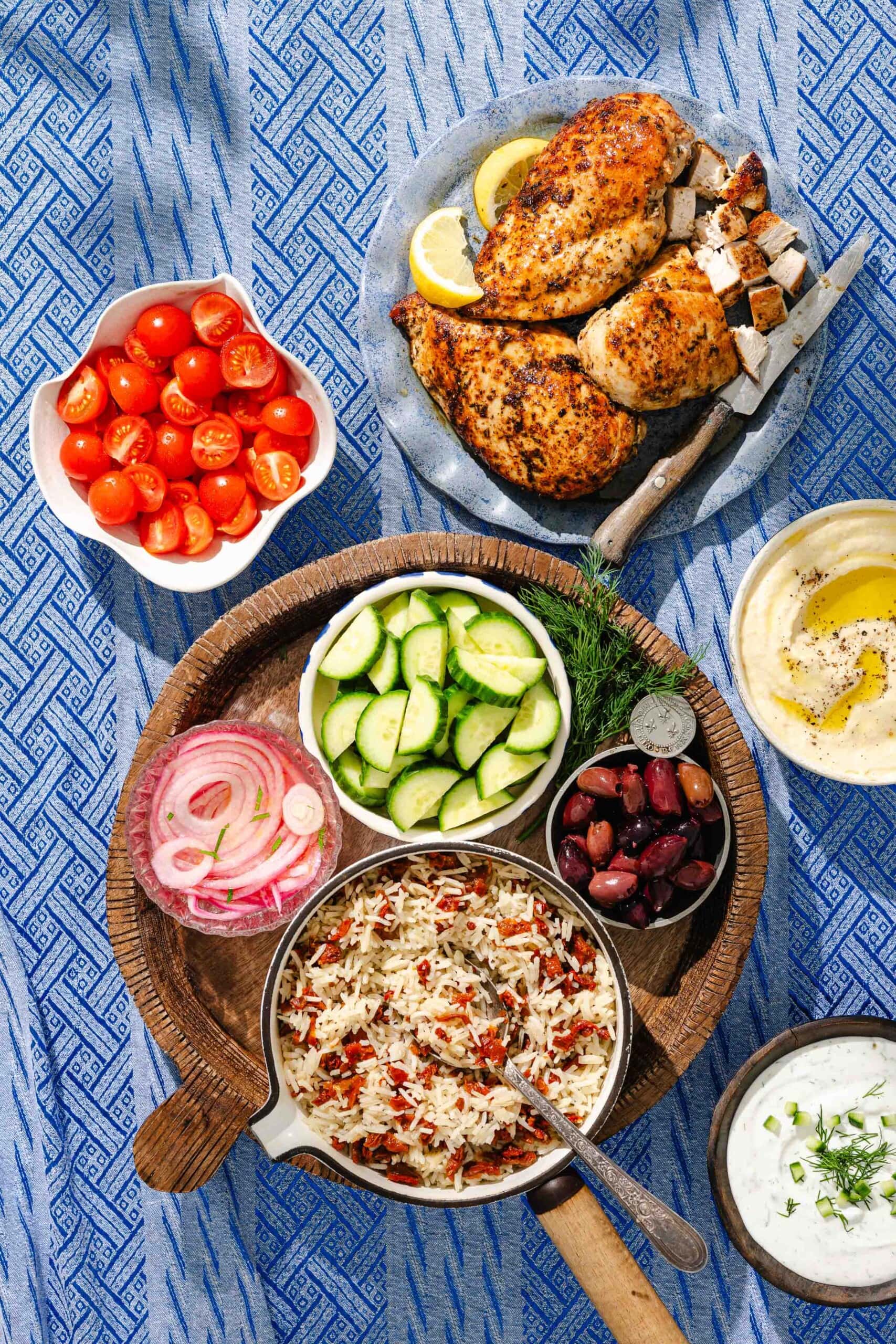
Souvlaki is probably Greece’s most beloved street food. It’s marinated meat grilled on skewers until smoky and charred. Chicken souvlaki is especially popular at home because it’s easy, affordable, and perfect with pita and tzatziki. Unlike gyro meat, souvlaki is always skewered and grilled fresh.
Kotopoulo Youvesti
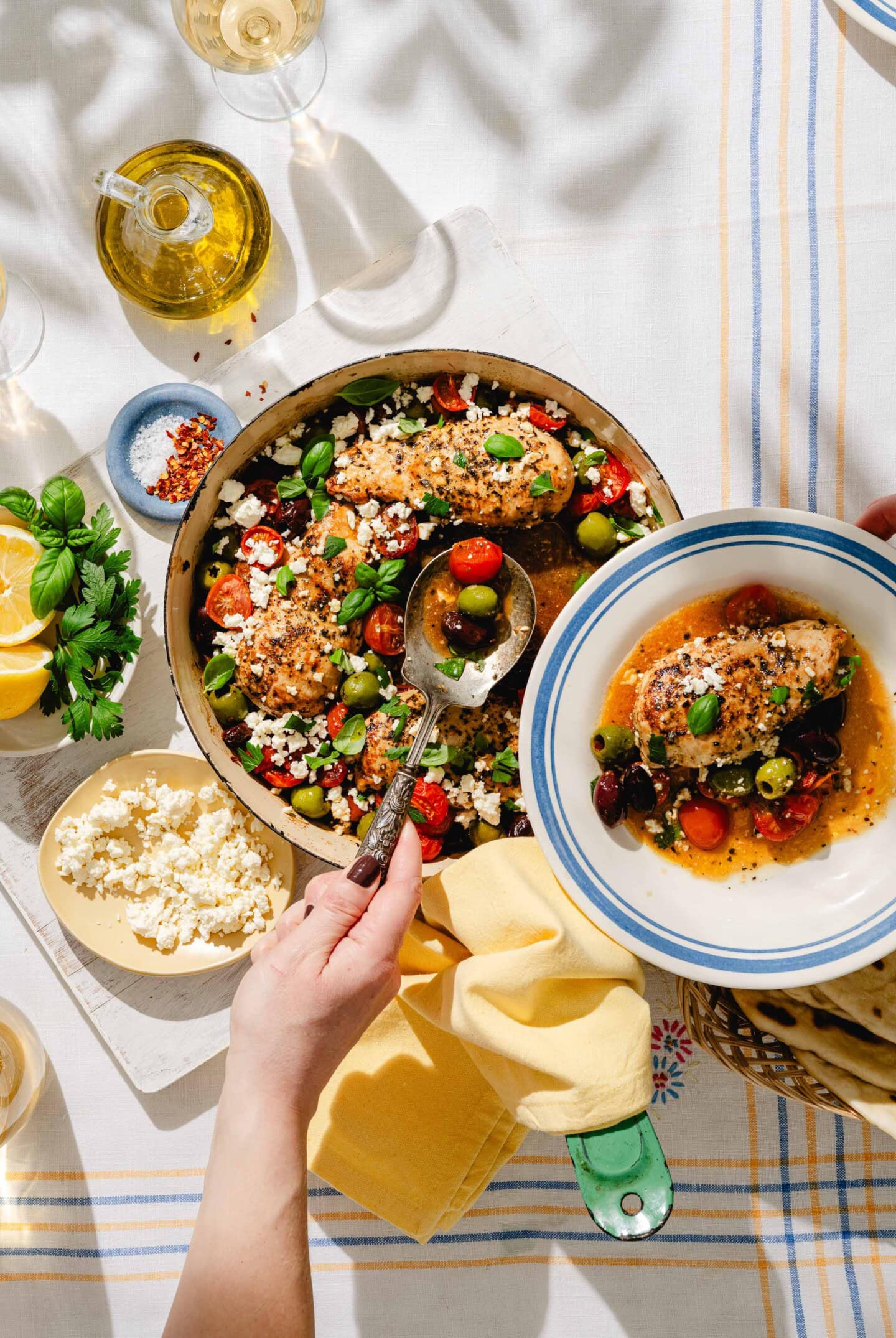
This Kotopoulo Youvesti recipe is a comforting Greek dish made with tender chicken thighs, orzo, and a rich tomato sauce infused with warm spices like cinnamon and allspice. It’s a cozy one-pot meal that’s packed with Mediterranean flavour and perfect for a family dinner on a chilly night.
Gemista
Gemista are tomatoes and peppers stuffed with herbed rice and baked until caramelized and sweet. The classic version is actually meatless — known as orphana — proving that Greek cooking has always celebrated vegetables as the centrepiece.
Traditional Greek Soups and Stews
Greek soups and stews are everyday comfort food. These are the dishes Greek families actually cook during the week — olive oil-braised vegetables, hearty legumes, and soups brightened with lemon. Many are naturally plant-based and deeply rooted in the ladera tradition.
Avgolemono
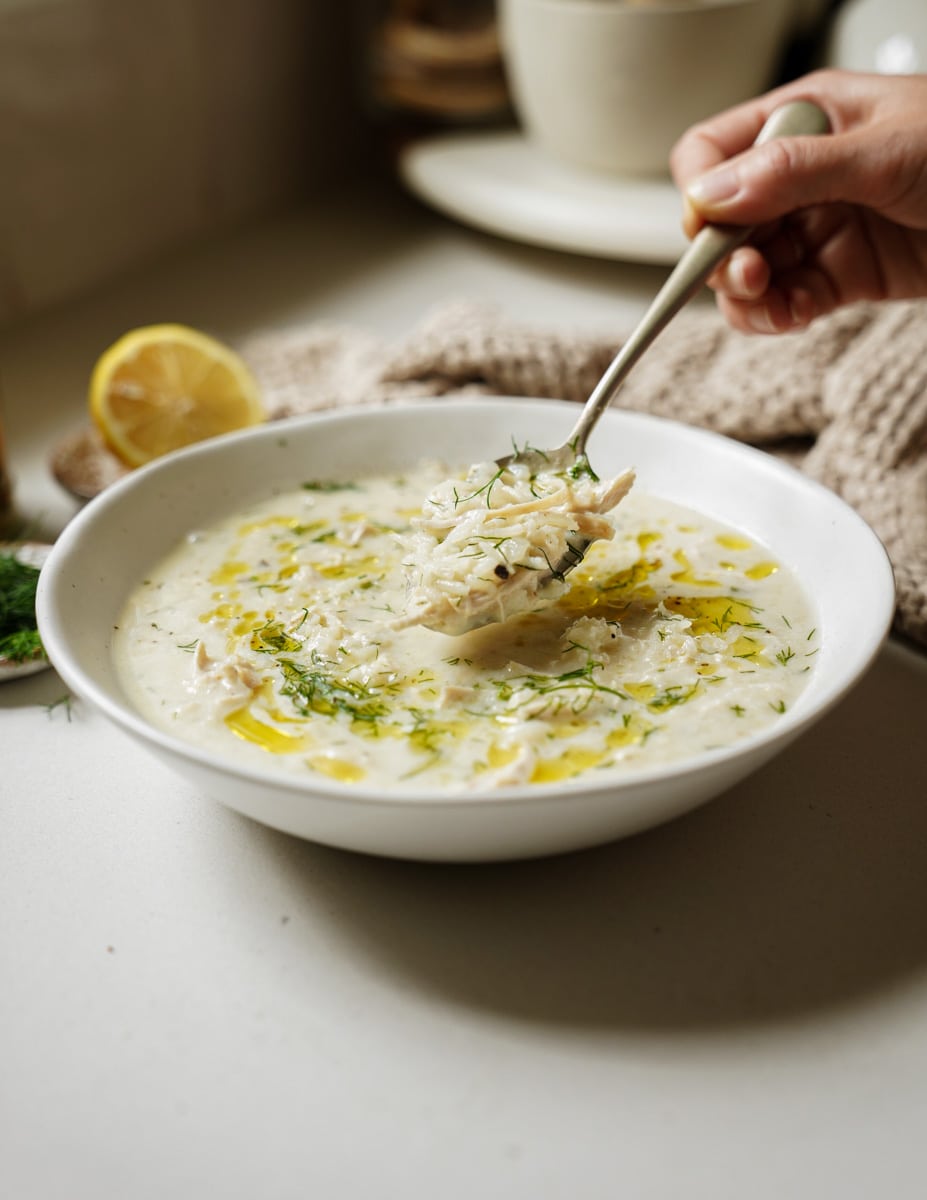
Avgolemono is Greece’s iconic egg-lemon soup made with chicken broth, rice, lemon juice, and eggs. The key is tempering the eggs slowly with hot broth so they become silky instead of scrambled. In Greek households, avgolemono is healing food — the cure for everything from a cold to a bad day.
Fasolakia
Fasolakia is green beans braised slowly in tomato sauce and olive oil until incredibly tender. It’s one of the purest examples of Ladera cooking and is often served at room temperature with feta and bread.
Creamy Greek Chickpea Soup
Revithia, aka Greek chickpea soup, is simple, lemony, and deeply comforting. On the island of Sifnos, it’s traditionally baked overnight in clay pots. Like so many Greek bean dishes, it tastes even better the next day.
Youvarlakia Avgolemono
Youvarlakia combines tender rice-studded meatballs with silky avgolemono broth. It’s cozy, bright, and one of the ultimate winter comfort foods in Greek kitchens.
Fakes
Fakes is a Greek lentil soup finished with olive oil and vinegar. It’s a staple during Lent and one of the simplest, healthiest weeknight meals you can make.
Traditional Greek Desserts and Sweets
Greek desserts are unapologetically sweet, syrup-soaked, and made for celebration. Honey, nuts, cinnamon, citrus, and phyllo show up again and again. These are the desserts served at Easter, weddings, namedays, and every big family gathering.
Baklava
Baklava layers crisp phyllo pastry with walnuts or pistachios, butter, cinnamon, and sticky honey syrup. Every Greek family has their own recipe, and everyone insists theirs is the best.
Bougatsa
Bougatsa is crispy phyllo filled with semolina custard and topped with powdered sugar and cinnamon. Originally from Thessaloniki, it’s often eaten warm alongside strong Greek coffee.
Loukoumades
Loukoumades are golden fried dough balls drizzled generously with honey and cinnamon. They’re one of the oldest recorded desserts in the world, and still one of the most fun to eat.
Revani
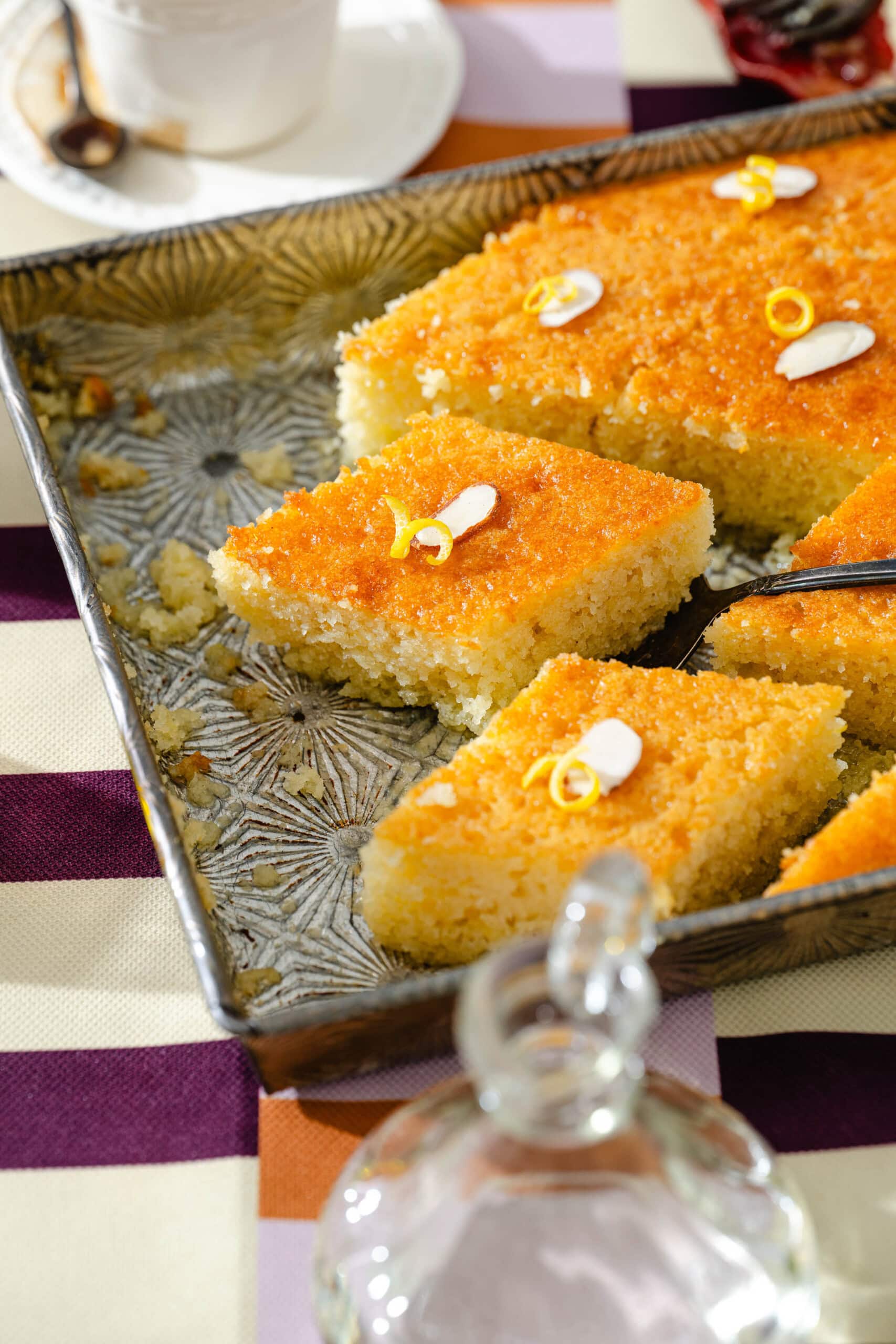
Revani is a semolina cake soaked in bright citrus syrup until unbelievably moist. It’s simple, fragrant, and one of those desserts that somehow tastes even better the day after it’s made.
Essential Ingredients in Greek Cooking
Extra-Virgin Olive Oil
Olive oil is the foundation of Greek cooking. Greeks use more olive oil per capita than almost anywhere else in the world, and in traditional recipes, it’s never treated as just a garnish. It’s the cooking medium, the sauce, and often the main flavour.
Feta Cheese
Real Greek feta is tangy, brined, and traditionally made from sheep’s milk or a sheep-and-goat milk blend. Since 2002, feta produced in Greece has been PDO-protected, meaning authentic feta must come from specific Greek regions.
Greek Yogurt
Greek yogurt is one of the most versatile ingredients in your kitchen. The thicker consistency is what makes it so useful in cooking — it holds up in marinades, doesn’t water down dressings, and adds structure to baked goods. See what it’s capable of in our Greek yogurt guide.
Dried Oregano (Rigani)
Greek oregano has a much stronger, earthier flavour than the oregano found in many grocery store spice aisles. It’s rubbed over grilled meats, sprinkled over salads, and infused into marinades constantly.
Honey
Greek honey — especially thyme honey from the islands — has an intensely floral flavour that’s less aggressively sweet than commercial honey. It’s drizzled over yogurt, used in desserts, and stirred into teas daily.
Phyllo Dough
Phyllo dough is the paper-thin pastry behind dishes like spanakopita, baklava, bougatsa, and galaktoboureko. Homemade phyllo is an art form passed through generations, but store-bought phyllo is absolutely part of modern Greek home cooking too.
FAQs
The most popular traditional Greek foods include moussaka, souvlaki, spanakopita, tzatziki, and Greek salad. Greek meze like dolmades, saganaki, and keftedes are also central to the dining experience, while desserts like baklava and loukoumades are staples at celebrations and gatherings.
Greek cooking relies heavily on olive oil, lemon, and oregano as its core flavour combination. The ladera tradition, which is vegetables braised in olive oil, is especially unique to Greece. Greek cuisine also carries influences from Byzantine and Asia Minor cooking traditions, giving it a distinct identity within Mediterranean cuisine.
Traditional Greek food is considered one of the healthiest cuisines in the world and forms the foundation of the Mediterranean diet. Greek meals focus heavily on vegetables, legumes, olive oil, whole grains, herbs, and moderate amounts of dairy and meat. The Greek island of Ikaria is one of the world’s Blue Zones, known for exceptional longevity.
A traditional Greek meal usually begins with meze. Shared plates like tzatziki, olives, feta, and bread, alongside wine or ouzo. Main dishes are often baked casseroles, grilled meats, fish, or olive oil-braised vegetables served family-style. Meals are meant to be slow, social, and shared.
The Mediterranean diet is a modern nutritional framework inspired largely by the traditional eating patterns of Greece and neighbouring Mediterranean countries. Greek cooking naturally emphasizes olive oil, vegetables, legumes, grains, fish, and moderate wine consumption, making it one of the original foundations of the Mediterranean diet.
More Greek Recipes to Explore
If you’re building your own Greek-inspired table at home, pair these dishes together the way we do at family gatherings: a few meze spreads, a baked main dish, fresh salad, and something syrupy for dessert. Start with a spread of tzatziki, saganaki, and horiatiki, then move into moussaka or souvlaki with warm pita on the side. And never skip dessert, there’s always room for baklava!
Greek food is about generosity, simplicity, and sharing what you have with the people around you. These recipes are the dishes I grew up with, the ones my mama still makes, and the flavours that instantly feel like home to me. I hope they become part of your table too!
1 person is discussing this recipe. Join in
Hey, Maria! I loved your guide on traditional Greek food; it really captures the essence of those dishes! One thing I’d like to see more of is a section on regional variations—like how moussaka differs from island to mainland. It’d be fascinating to dive deeper into those unique local ingredients and cooking styles! Keep sharing that delicious knowledge! spider solitaire free